
The Diaspora Investment Gap: The Willingness Is There. What’s Missing
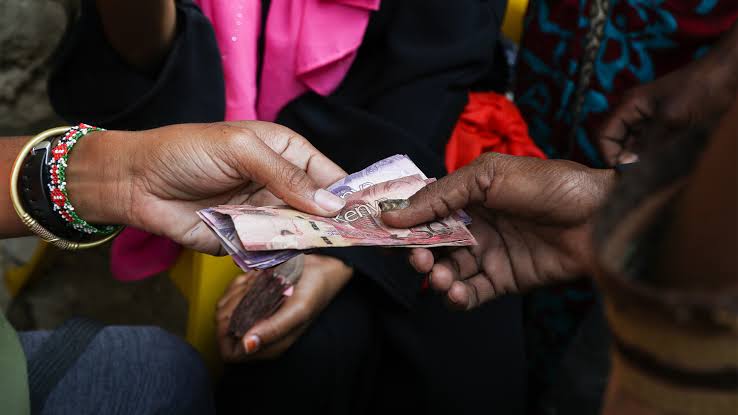
For many diaspora professionals, sending money home is already part of how they stay connected to their countries and communities of origin. But there is an opportunity to look beyond remittances and ask a different question:
What happens when diaspora capital becomes investment capital?
At ZidiCircle, this question is central to how we think about diaspora engagement. Our recent responses from 42 prospective investors reveal an interesting gap: the willingness to invest is there, but formal investor education is still limited.
The appetite to invest is significant
When asked how much they would be willing to invest as trained investors, the responses showed considerable interest.
Among the 87 respondents:
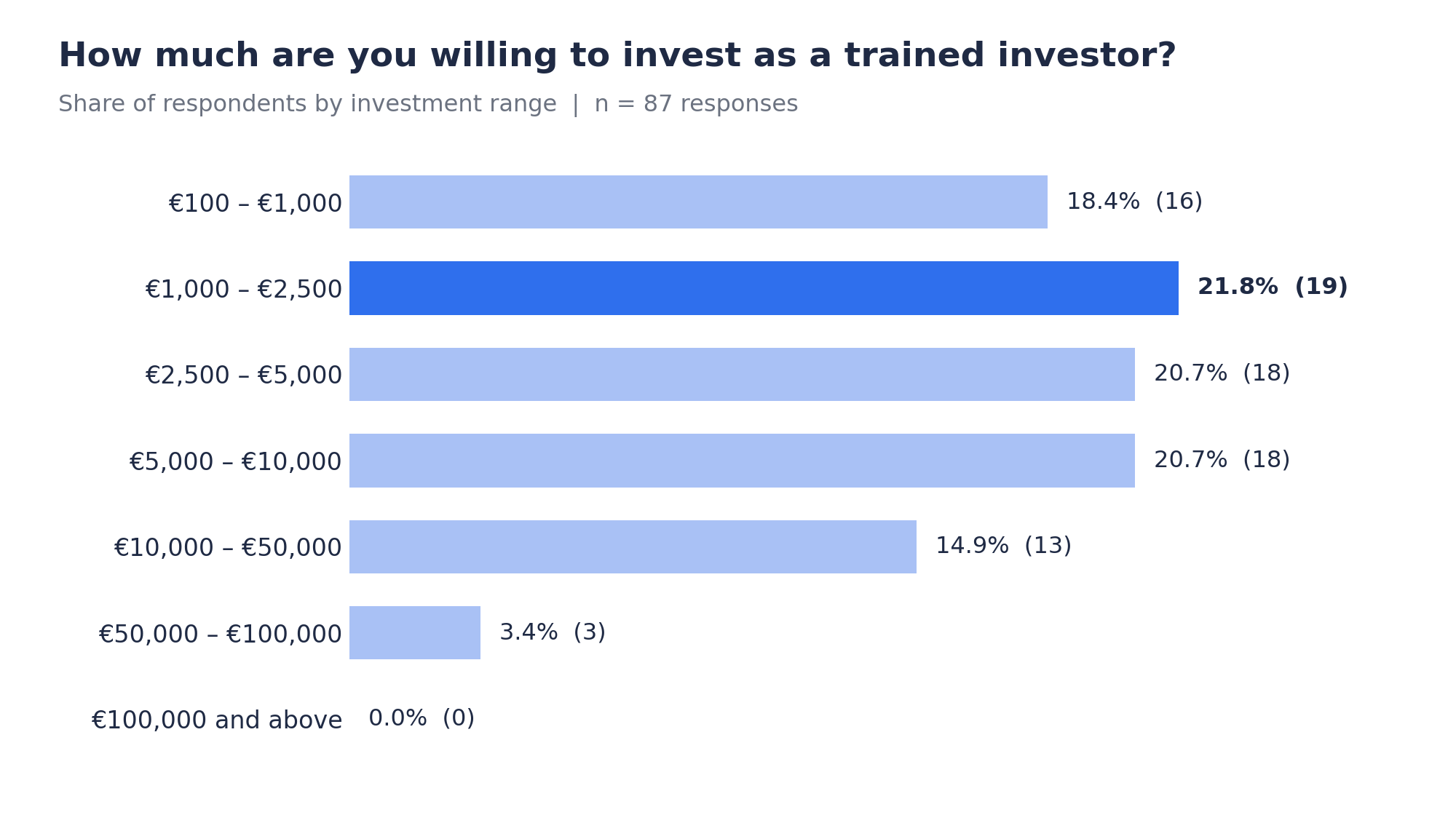
- 81.6% said they would be willing to invest at least €1,000
- 59.8% would consider investing €2,500 or more
- 39.1% would consider investing €5,000 or more
- 18.4% would consider investing €10,000 or more
- Some respondents (3.4%, or 3 people) indicated a willingness to invest between €50,000 and €100,00
These figures point to something important: diaspora professionals are not necessarily lacking an appetite for investment.
The bigger question is whether they have the knowledge, confidence, access and structures required to invest responsibly.
There is a significant investor education gap
The second finding makes the picture even more interesting.
88.5% of respondents said they had never participated in an investor training programme before.
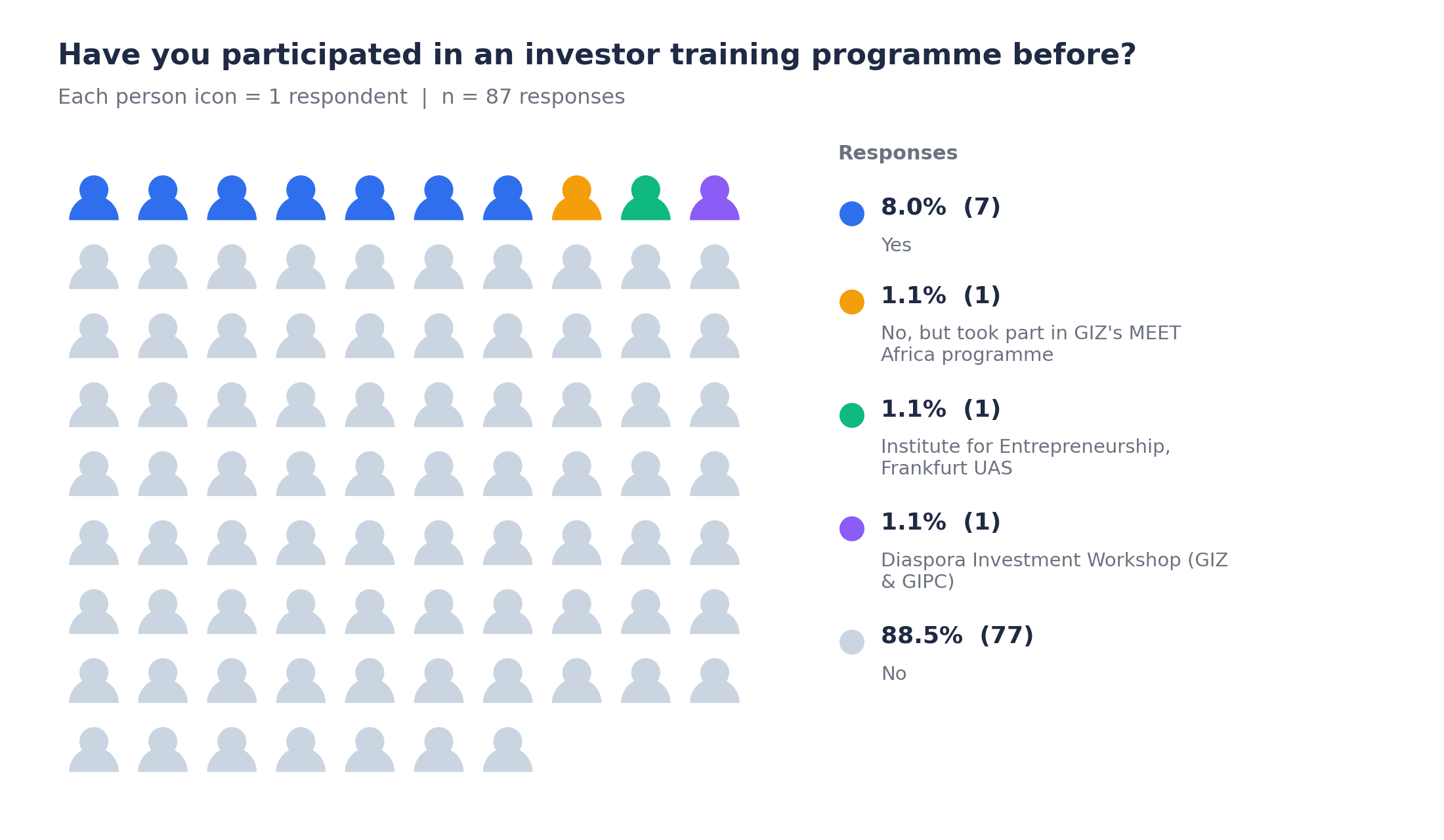
This means that the majority of people expressing an interest in investing have had little or no formal exposure to investor education.
And investing is very different from simply having money to deploy.
An investor needs to understand how to assess a business, evaluate risk, conduct due diligence, understand investment structures and determine whether an opportunity aligns with their objectives.
Without that knowledge, willingness alone does not necessarily translate into investment.
Moving beyond the remittance mindset
For years, conversations around diaspora engagement have often centred on remittances: how much money is sent home, where it goes and how it supports families and communities.
Diaspora money isn’t only helping individual families. When people send money home for food, school fees, healthcare, etc., that money is spent locally and circulates through the economy paying businesses, workers, producers and service providers.
When we look at Economic Development, diaspora capital can still play a much broader role.
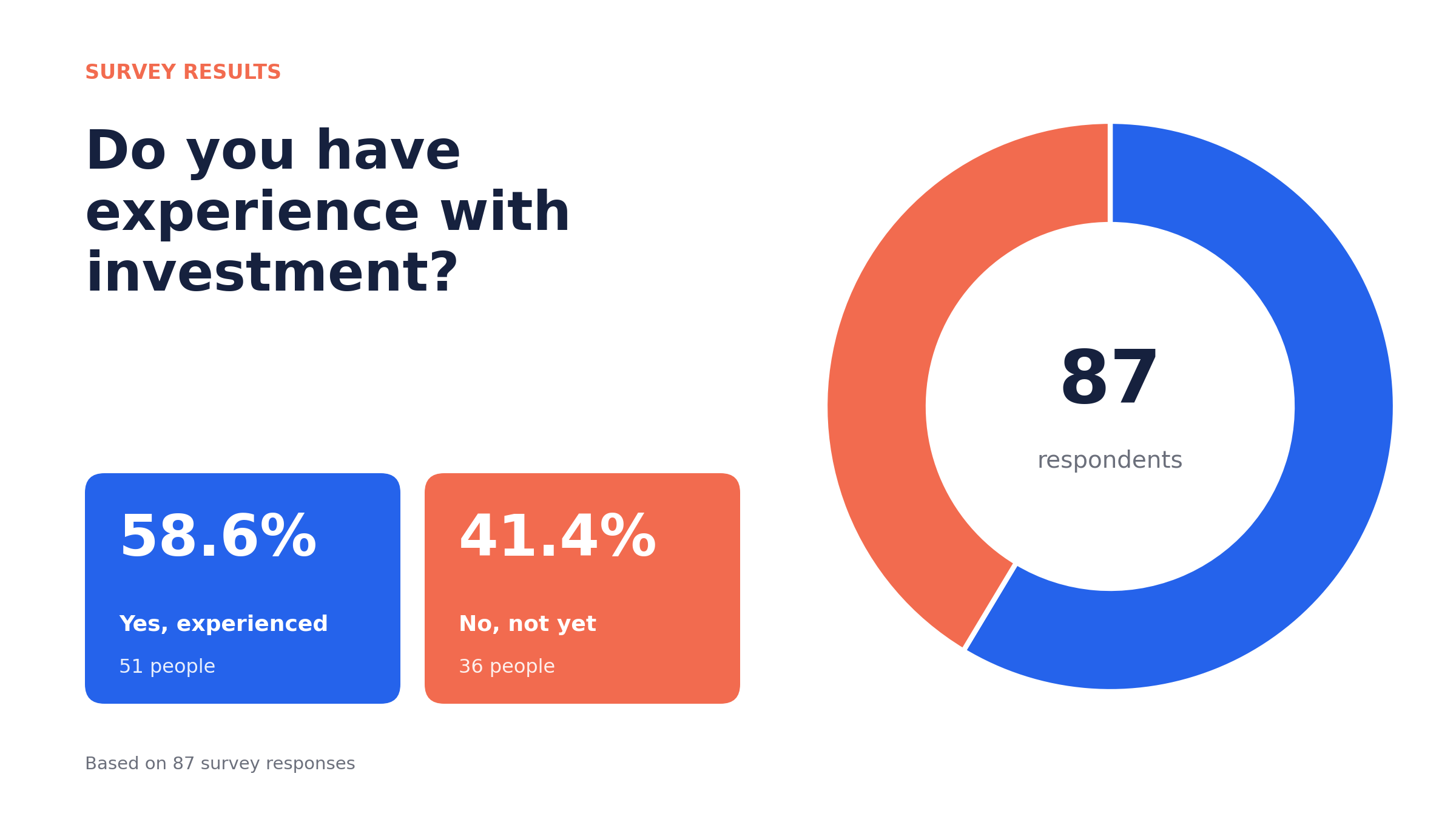
In our survey we ask the potential diaspora investors if they had any investment experience…….
Diaspora professionals also bring skills, networks, market knowledge, professional experience and investment capital that can contribute to the growth of businesses and economies in their countries of origin.
The opportunity is therefore not simply to encourage diaspora professionals to send more money home.It is to create pathways for them to become informed participants in investment ecosystems they can participate in.
That could mean investing directly in businesses, participating in funds, co-investing alongside experienced investors or using their professional networks and expertise to support companies in which they invest.
From willingness to informed action
This is where investor education becomes important.
The goal should not be to tell people what to invest in. It should be to give them the tools to make better-informed decisions for themselves.
A trained investor is better positioned to ask the right questions:
What am I investing in?
How do I assess the opportunity?
What risks am I taking?
What should I look for during due diligence?
Who else is investing?
What does the investment structure mean for me?
How do I assess whether an opportunity fits my investment goals?
These are the skills that can help transform investment interest into informed participation.
Building the next generation of diaspora investors
Our Learn, Connect & Invest approach is built around this idea: making venture investing more accessible while helping diaspora professionals develop the knowledge and networks to participate as informed investors.
Through the MEG Diaspora Investor Training, implemented by ZidiCircle with GIZ, diaspora professionals in Germany are being introduced to the knowledge, tools, risk-mitigating structures and deal access needed to better understand investment opportunities.
As Fridah Ntarangwi, Fund Manager at ZidiCircle, explains:
“Our ‘Learn, Connect & Invest’ framework was built to democratize venture investing and turn diaspora professionals into catalyst investors for their home countries. Partnering with GIZ under the MEG programme gives diaspora members in Germany the knowledge, risk-mitigating structures, and deal access to move from passive remitters to active impact investors.”
The findings from our prospective investor cohort reinforce why this work matters.
The willingness is there.
The next step is ensuring that those who want to invest have the knowledge and support to do so responsibly.
Because diaspora engagement does not have to stop at sending money home.
It can also mean investing, building, connecting and participating in the growth of the businesses and communities to which people remain connected.